
Across Maryland, canals and ponds play a quiet but critical role in daily life. They support boating communities along the Chesapeake Bay, manage stormwater in residential developments, protect shorelines from erosion, and create healthy environments for fish and wildlife. Over time, however, these water bodies face a common challenge that is often overlooked until it becomes costly: sediment accumulation.
Sediment build-up is a natural process, but in Maryland it is often accelerated by shoreline erosion, stormwater runoff, development pressure, and frequent coastal weather events. Left unaddressed, sediment reduces water depth, degrades water quality, and limits the safe and effective use of canals and ponds. This is why Maryland sediment dredging has become an essential part of waterway management across the state.
In this guide, you will learn what sediment is, how it accumulates in canals and ponds, and why canal sediment build-up is such a persistent issue in Maryland communities. We will also cover real-world impacts, practical pond dredging solutions, permitting considerations, and how experienced local contractors help restore and protect these waterways. The goal is to provide clear, practical insight so property owners, HOAs, and municipalities can make informed decisions.
Understanding Sediment Build-Up
What Is Sediment?
Sediment is the material that settles at the bottom of canals, ponds, rivers, and bays. It is typically composed of fine soil particles, sand, decaying organic matter, leaves, and debris carried by water. In Maryland waterways, sediment often contains nutrients such as nitrogen and phosphorus that come from lawns, streets, and upstream land use.
Some sediment accumulation is natural and expected. Streams and shorelines slowly erode, and that material moves downstream. Problems arise when human activity speeds up this process. Development, clearing vegetation, and altering drainage patterns increase the rate at which material enters canals and ponds, faster than nature can manage.
How Sediment Accumulates in Waterways
Sediment enters canals and ponds through several common pathways in Maryland.
Stormwater runoff is one of the largest contributors. Heavy rain events wash soil, sand, and organic material from streets, yards, and construction sites into nearby waterways. Shoreline erosion is another major source, especially along tidal canals and ponds exposed to wave action.
Urban development increases hard surfaces such as roads and rooftops. These surfaces prevent water from soaking into the ground, sending larger volumes of runoff directly into canals and ponds. Boat traffic also plays a role. Repeated wakes can erode canal banks and stir bottom sediments, worsening canal sediment build-up over time.
Seasonal changes matter as well. Maryland’s freeze-thaw cycles, spring rains, and hurricane season all influence how quickly sediment moves and settles.
What Is Canal Sediment Build-Up?
Canals are especially vulnerable to sediment accumulation because they are narrow, slow-moving waterways. Water flow is often limited, allowing sediment to settle rather than be washed away. Residential canals, navigation channels, and tidal access canals throughout Maryland experience canal sediment build-up that gradually reduces depth.
In communities along the Eastern Shore, Anne Arundel County, and Southern Maryland, shallow canals can prevent boats from reaching docks at low tide. This is often one of the first signs that dredging may be needed.
Pond Sedimentation Explained
Ponds accumulate sediment differently from canals. Because ponds are enclosed systems, sediment tends to settle evenly across the bottom. Leaves, grass clippings, algae, and other organic debris gradually accumulate in the pond, reducing depth and water volume.
Vegetation around the pond and the size of the surrounding watershed play a big role. Ponds located below developed areas tend to fill faster, which is why pond dredging solutions are commonly required for stormwater ponds and community lakes in Maryland.
The Impacts of Sediment Accumulation
Environmental Consequences
As sediment builds up, water quality declines. Murky water blocks sunlight, reducing plant growth and oxygen levels. Nutrient-rich sediments promote algae blooms, which can lead to foul odors and fish stress.
Habitat loss is another concern. Fish and invertebrates rely on clean, stable bottoms and adequate depth. Excess sediment smothers spawning areas and reduces overall ecological health.

Economic and Recreational Impacts
Sediment accumulation affects how people use their waterways. Shallow canals limit boating access and reduce navigability. Fishing and swimming become less enjoyable, and waterfront property values can suffer.
Communities often face higher maintenance costs when sediment issues are ignored. Emergency dredging is far more expensive than planned Maryland sediment dredging performed on a regular schedule.
Infrastructure and Flood Risks
Sediment can block culverts, drainage pipes, and outfalls connected to canals and ponds. During heavy rain, this increases the risk of flooding in nearby neighborhoods. Managing canal sediment build-up is a key part of protecting homes and infrastructure from storm damage.
Why Maryland Sediment Dredging Matters
Restoring Water Depth and Function
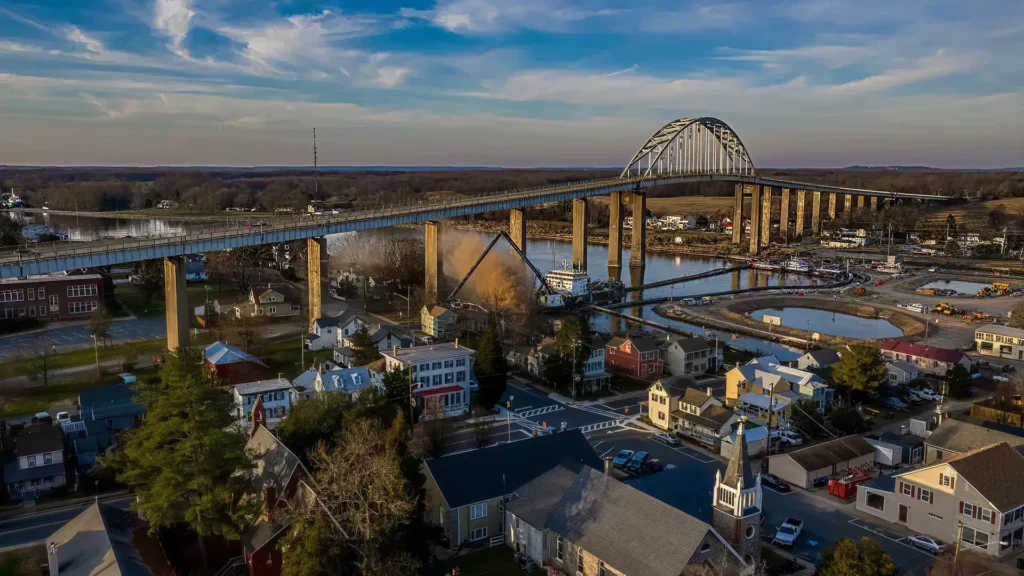
Dredging restores proper depth, allowing canals and ponds to function as designed. Safe boat passage, improved drainage, and better water circulation all depend on maintaining adequate depth through Maryland sediment dredging.
Improving Ecological Health
Removing accumulated sediment reduces excess nutrients and improves oxygen levels. This supports healthier fish populations and more balanced plant growth.
Long-Term Cost Savings
Planned dredging is an investment. It helps avoid costly repairs to docks, bulkheads, and drainage systems. Regular Maryland sediment dredging is far more cost-effective than waiting for severe problems to develop.
Pond Dredging Solutions: What Works Best
Mechanical Dredging
Mechanical dredging uses excavators or clamshell buckets to remove sediment. It works well for small ponds, shallow canals, and areas with dense material. The main advantage is precision, though access and temporary disturbance must be managed carefully.
Hydraulic Dredging
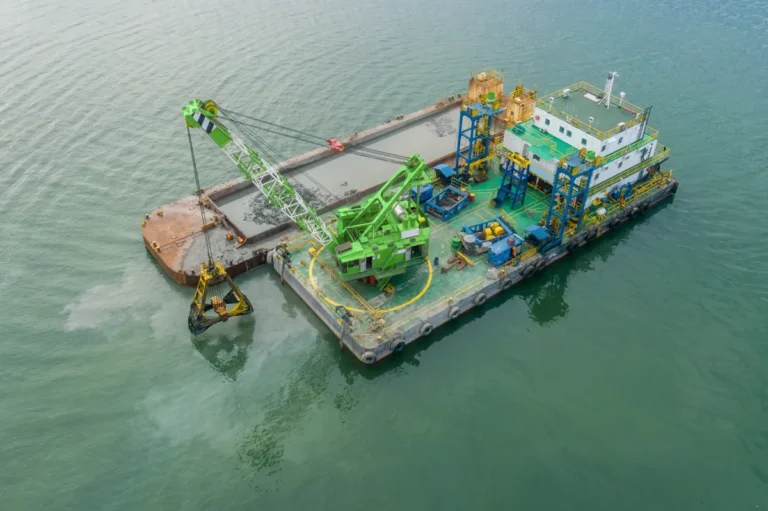
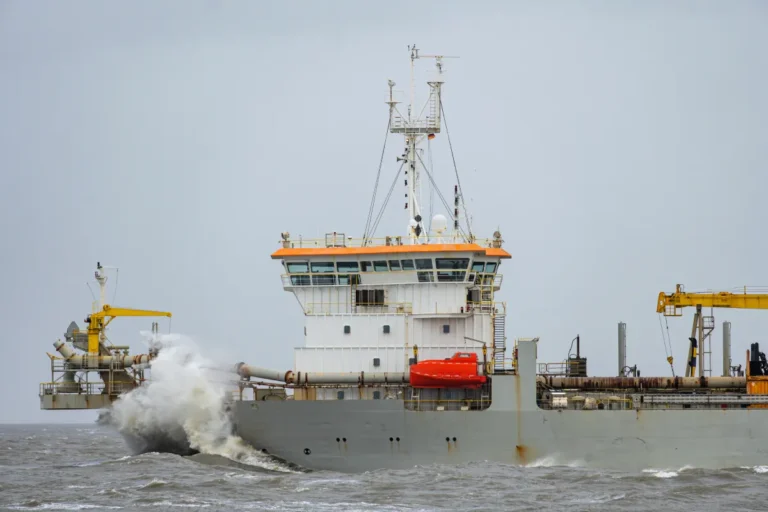
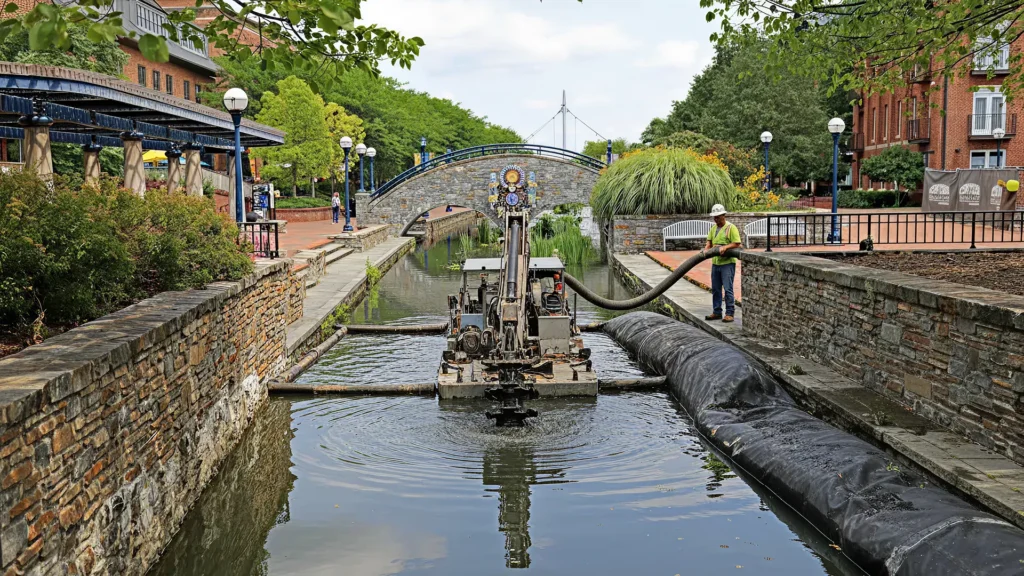
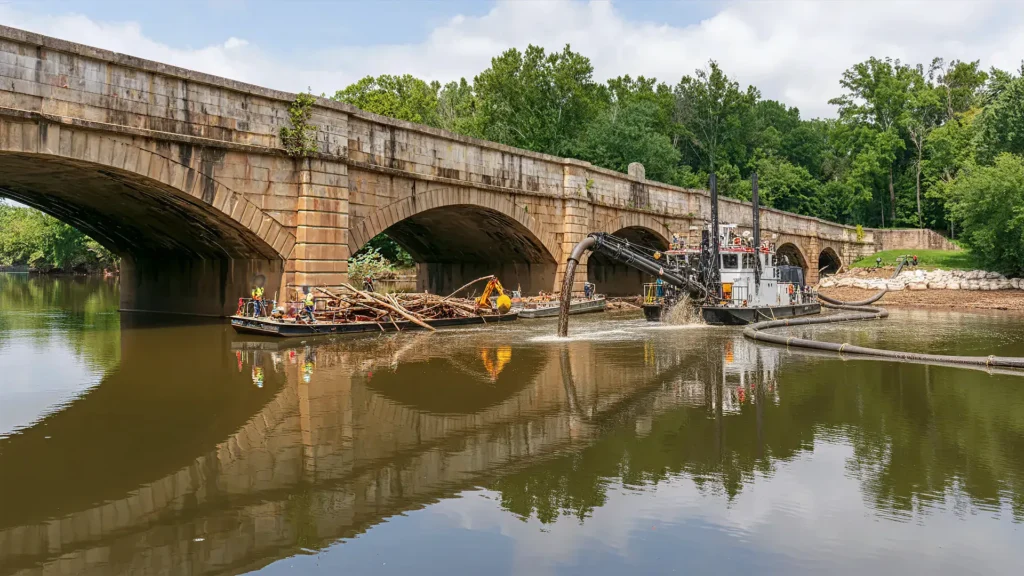
Hydraulic dredging uses suction to pump sediment as a slurry. This method is ideal for canals and larger ponds. It enables efficient removal with minimal disruption, making it a preferred option for many canal sediment buildup projects.
Innovative and Eco-Friendly Techniques
Modern pond dredging solutions often include sediment dewatering and reuse. Silt curtains and erosion controls protect surrounding areas during work. These methods support environmental stewardship while achieving effective results.
Permitting and Regulations in Maryland
Dredging in Maryland requires proper permits. State and federal agencies oversee work to protect wetlands and waterways. Experienced contractors help navigate this process and ensure compliance.
How to Assess Sediment Build-Up
Understanding when sediment accumulation has crossed the line from normal to problematic is critical. Early identification allows Maryland sediment dredging to be planned proactively rather than as an emergency response.
Visual Indicators
Many canal and pond owners first notice sediment issues through visible changes. Water that was once clear may become cloudy or darker. Shallow shelves often appear near shorelines, and debris lines may form after storms. In canals, boats may begin scraping bottom at low tide, a common symptom of canal sediment build-up in residential waterfront communities.
In ponds, excessive aquatic plant growth or persistent algae mats can indicate that nutrient-rich sediment has accumulated on the bottom.
Professional Surveys and Mapping
While visual signs are helpful, professional assessment provides clarity. Bathymetric surveys measure water depth across canals and ponds, identifying sediment hotspots and depth-loss trends. Sediment core sampling can also reveal how quickly material accumulates and whether nutrients are contributing to water quality issues.
These tools are often used to plan Maryland sediment dredging projects with precision, ensuring the right method and scope are selected.
When to Act: Signs You Need Dredging
Dredging should be considered when navigation becomes unreliable, when algae blooms recur year after year, or when a pond or canal has lost a noticeable percentage of its original depth. Delaying action often increases costs and environmental impact, especially in areas already struggling with canal sediment build-up.
Case Studies: Maryland Waterways Successfully Dredged
Real-world projects highlight how targeted dredging restores function and value to local waterways.
- Canal Sediment Removal Project Overview
In a coastal Maryland neighborhood with residential canals, years of shoreline erosion and storm runoff reduced depths to the point where boat access was restricted. Hydraulic dredging was selected due to limited access and the need to minimize disruption.
Sediment was removed efficiently, restoring navigable depth and improving water circulation. Residents reported safer boat passage and reduced maintenance concerns. This project is a strong example of how Maryland sediment dredging directly supports waterfront living.
- Pond Dredging Success Story
A community pond designed for stormwater control had accumulated excessive organic sediment, resulting in foul odors and seasonal algal blooms. Mechanical dredging was used to remove nutrient-laden material, followed by shoreline stabilization.
The results included clearer water, reduced algae growth, and improved aesthetics. The project demonstrated that well-planned pond dredging can extend the service life of critical stormwater infrastructure.
- Lessons Learned and Best Practices
Successful projects share common traits: early assessment, clear goals, appropriate dredging methods, and experienced contractors familiar with local conditions. Addressing sediment issues before they become severe reduces costs and environmental risk.
Choosing the Right Dredging Partner
Selecting the right contractor is as important as choosing the right dredging method.
What to Look for in a Contractor
Experience with Maryland sediment dredging is essential. Contractors should understand local waterways, tidal influences, and regulatory requirements. Access to specialized equipment, including hydraulic dredges and support vessels, allows for flexible project planning.
A strong environmental and safety record is also critical, particularly when working near homes, wetlands, or sensitive habitats.
Questions to Ask Before Hiring
Before committing to a project, ask about permitting support, expected timelines, and sediment disposal plans. Understanding how canal sediment build-up or pond sediment will be handled off-site or reused is an important part of responsible dredging.
You should also ask how the contractor plans to protect surrounding areas during work, including erosion control and water quality safeguards.
Why Maryland Coastal Dredge?
Maryland Coastal Dredge brings local expertise, practical knowledge, and a proven track record to every project. Their familiarity with Maryland waterways, permitting processes, and sediment conditions allows them to deliver effective, compliant solutions. Their focus on sustainable practices and dependable pond dredging solutions makes them a trusted partner for communities across the state.
Maintenance and Ongoing Sediment Management
Dredging is most effective when paired with long-term management strategies.
Regular Monitoring Plans
Scheduled depth checks and visual inspections help track sediment accumulation over time. Regular monitoring enables Maryland sediment dredging to be planned at appropriate intervals rather than reacting to severe canal sediment buildup.
Erosion Control and Watershed Practices
Stabilizing shorelines with vegetation, managing runoff, and maintaining buffers around ponds reduce the rate at which sediment enters waterways. These practices extend the benefits of dredging and protect water quality.
Long-Term Budgeting for Dredging
Communities that budget for periodic dredging avoid financial strain and the need for emergency repairs. Planning enables efficient implementation of pond dredging solutions with minimal disruption.
Trusted Local Expertise for Maryland’s Sediment Challenges
Sediment build-up in Maryland canals and ponds is a gradual process, but its impacts are significant. Reduced water depth, declining water quality, and increased flood risk affect both property value and environmental health. Understanding the causes of canal sediment build-up and knowing when to act empowers communities to protect their waterways.
Proactive Maryland sediment dredging restores function, improves ecological balance, and supports long-term cost savings. With proper planning and the right partner, canals and ponds can continue to serve Maryland communities for decades to come.If you are noticing signs of sediment accumulation, now is the time to act. Contact Maryland Coastal Dredge to schedule an assessment and explore tailored pond dredging solutions designed for Maryland’s unique coastal and inland waterways.